Everyone knows Count Dracula — the suave, caped vampire of a thousand films. Far fewer know that behind the name lies a real medieval warlord whose actual deeds were more horrifying than anything Bram Stoker put on the page, and that the name, along with half the novel’s scenery, came from an English seaside town. It is a story that runs from a windswept Yorkshire clifftop to a forest of the dead in fifteenth-century Wallachia.
Start with the writer. In the summer of 1890, the Irish author Bram Stoker took a holiday in the atmospheric fishing town of Whitby, on the Yorkshire coast, where the dramatic ruins of a Gothic abbey loom over the harbour and a steep flight of 199 steps climbs to an ancient churchyard on the cliff. Stoker was already turning over an idea for a vampire novel. Whitby seized his imagination — he wove its abbey, its steps, its clifftop graves, and even the real wreck of a foreign ship in the harbour directly into his book. And then, on 8 August 1890, in Whitby’s public library, he found the crucial spark: a dusty old book about the principalities of Wallachia and Moldavia, which mentioned a fifteenth-century prince named Dracula, and noted that “Dracula” in the Wallachian tongue meant “devil”. Stoker took the name, and Count Dracula was born.
The Horror
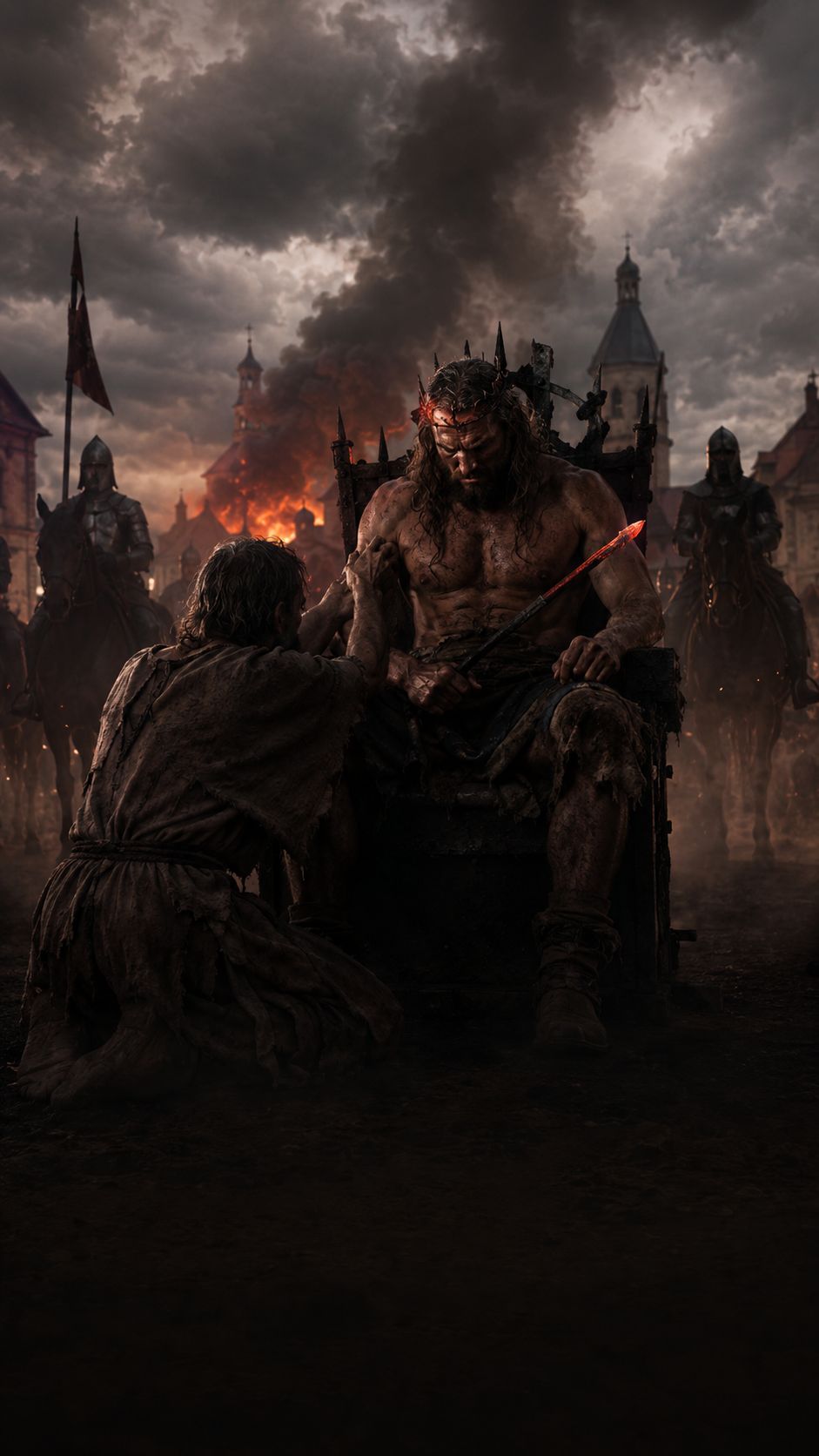
But the real man who bore that name was no fantasy. Vlad III, prince of Wallachia — a land in what is now Romania — was born around 1431, and he ruled in one of the most violent corners of a violent age, fighting the invading Ottoman Empire. He earned two names. From his father, of the Order of the Dragon, he took “Dracula” — son of the dragon, or son of the devil. And from his signature method of killing came the name history has never let go, though it was not his in life: Ottoman writers were calling him Kazıklı Voyvoda, the Impaler Lord, by about 1500, and the Romanian Țepeș is first recorded in a letter of 1551. Impalement was his trademark, a punishment of appalling, drawn-out cruelty in which victims were mounted on tall wooden stakes, and he used it against enemy soldiers, criminals, rivals and whole communities.
Before going further, it is worth being honest about the numbers and the sources, because in this story they are the same problem. Much of what we “know” about Vlad’s atrocities comes from hostile German accounts circulating in manuscript from the early 1460s and printed as pamphlets from about 1488, a generation after the events, by men with reasons to blacken him. The one figure in Vlad’s own hand is no safer: writing to Matthias Corvinus on 11 February 1462, he claimed 23,884 Turks and Bulgarians killed in his winter raid across the Danube, not counting those burned in their houses. That was a boast written to secure Hungarian troops. Nothing that follows should be read as a body count.
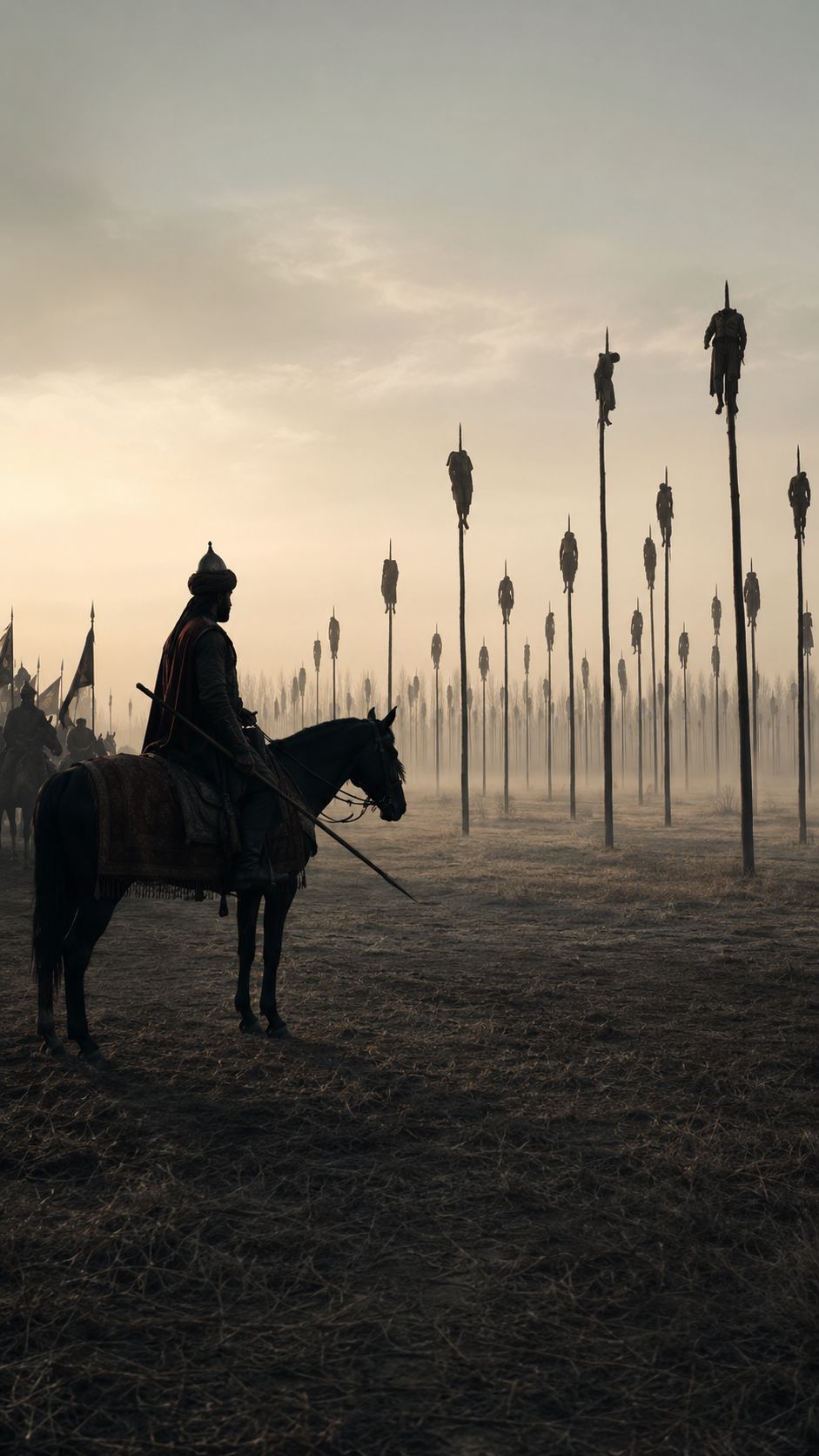
The most infamous episode came in the summer of 1462. On the night of 17 June, Vlad led a raid into the Ottoman camp in an attempt on the sultan’s own tent, an action recorded on both sides, which caused chaos and heavy losses but failed in its object. When the mighty Ottoman Sultan Mehmed II — the conqueror of Constantinople himself — advanced on Vlad’s capital of Târgoviște, he came upon the scene that has defined the campaign ever since: a vast “forest” of stakes holding the impaled dead. That scene rests on a single source, the Greek historian Laonikos Chalkokondyles, writing within a decade or so of the campaign, who gave the number as about twenty thousand and recorded not revulsion but astonishment: the sultan, he wrote, said that a man who had done such deeds could not be deprived of his country. Mehmed did withdraw in late June, but he withdrew having got what he came for. Vlad’s brother Radu was set on the throne in his place, and Vlad lost Wallachia.
In Romania itself, Vlad has often been remembered very differently — as a harsh but heroic defender of his land against foreign conquest. But even stripped of the worst propaganda, the core is real: Vlad ruled by the stake, and left a reputation for cruelty that echoed across Europe for centuries. He was killed in battle in late December 1476 or early January 1477 and, as contemporary reports had it, was beheaded, his head carried to Constantinople and displayed as proof the “Impaler” was truly dead.
The Modern Relic
Here is the strange truth that historians will tell you, though: Bram Stoker almost certainly took little more than the name and a few scraps from the real Vlad — he probably knew nothing of the forest of the impaled, and his Count is a Victorian invention, not a portrait of the historical prince. And yet the two are now bound together forever. You can visit both ends of the legend. In England, you can climb the very same 199 steps at Whitby, stand in the clifftop churchyard among the graves, and look up at the abbey ruins that frame it. Below lies Tate Hill Sands, where Stoker ran the wrecked Demeter aground and sent his vampire ashore. And far away in Romania, the mountaintop ruin of Poenari Castle, perched above a gorge and reached by a climb of some 1,480 steps, is a fortress Vlad genuinely held and rebuilt, though access is intermittent and worth checking before travelling. Bran Castle, which has no documented connection to him at all, draws hundreds of thousands of visitors a year who want to believe it is “Dracula’s castle”. Two places, two countries, one legend: a fictional count who only drinks blood, and the real prince behind his name, whose reputation was built on spilling it.